What is GEO? Generative Engine Optimization Explained
Learn how Generative Engine Optimization (GEO) helps brands appear in AI-generated answers from ChatGPT, Claude, and Gemini.
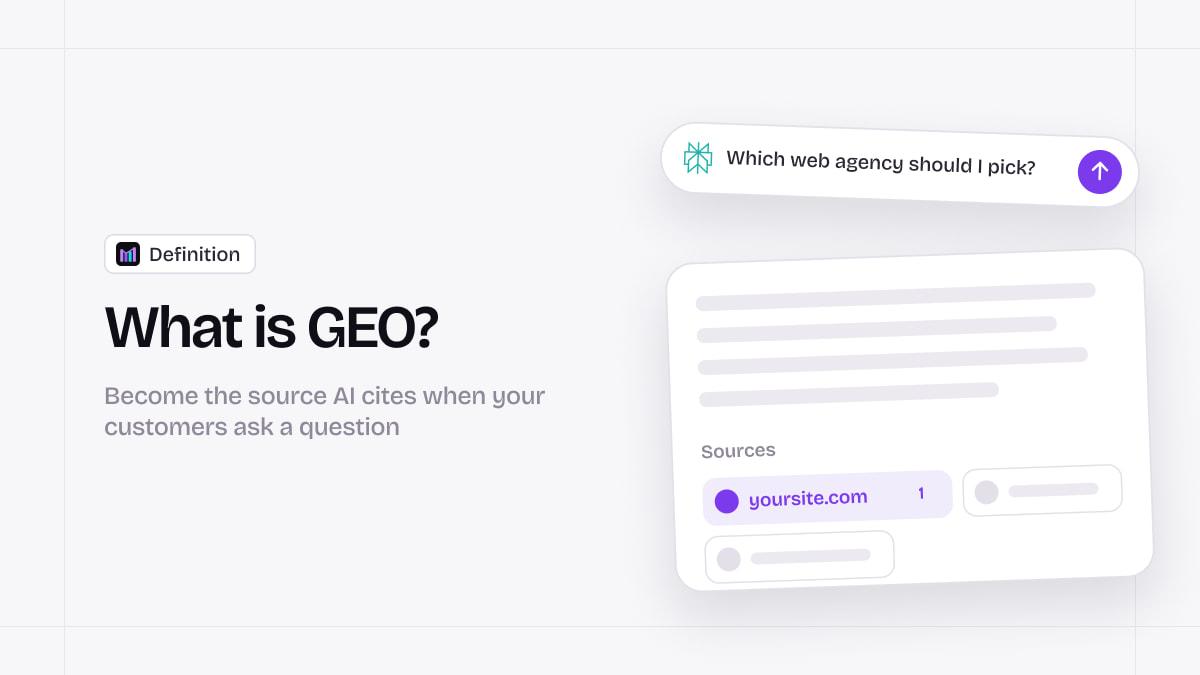
Generative Engine Optimization (GEO) is the practice of optimizing your brand's online presence so that AI models — like ChatGPT, Claude, and Gemini — mention and recommend your brand in their responses.
The question to ask yourself right now: when a user asks an AI to recommend a tool in your industry, does your brand appear in the answer?
Why GEO matters
More and more users turn to AI assistants to get recommendations. The visibility of your brand in AI-generated responses is becoming a critical marketing channel.
Unlike traditional SEO, which targets rankings in search engines, GEO targets the training data and retrieval sources that large language models use to generate their responses.
GEO vs SEO
| Aspect | SEO | GEO |
|---|---|---|
| Target | Search engines (Google, Bing) | AI models (ChatGPT, Claude, Gemini) |
| Goal | Rank in search results | Be mentioned in AI responses |
| Key metric | Position, clicks, impressions | Mention rate, AI share of voice |
| Main lever | Keywords, backlinks, technical SEO | Brand authority, citations, structured data |
| Measurement | Google Search Console, SEMrush | Dedicated AI tracking tools |
How GEO works
1. AI visibility tracking
Monitor how often AI models mention your brand when users ask relevant questions. This gives you your mention rate — the baseline metric.
2. Share of Voice analysis
Measure your brand's mention rate compared to competitors across different AI models. A 25% rate might seem fine until you realize your main competitor sits at 60%.
3. Content optimization
Create authoritative, well-structured, factual content that AI models are more likely to reference. LLMs favor comprehensive guides, clear definitions, and properly sourced data points.
4. Prompt category coverage
Ensure your brand appears across different types of queries: comparisons, direct recommendations, how-to guides, and best-of lists.
The signals LLMs recognize
- Wikipedia presence and Wikidata — a premium source for most models
- Reviews on G2, Capterra, Trustpilot — reputation signals
- Mentions in specialist press — sector authority
- Co-mentions with recognized brands — authority by association
- Reference content cited by others — amplification of your signal
How to get started
The first step is understanding your current AI visibility. Without baseline data, you cannot know where you stand or measure the impact of your actions.
- Define 10–20 prompts representative of your industry
- Query ChatGPT, Claude, Gemini, and Perplexity on each one
- Record your mention rate and that of your top 3 competitors
- Identify prompts where you are absent — those are your first opportunities
Tools like Mentova automate this process and give you a full dashboard with progress over time.
Conclusion
GEO is not a trend — it is the logical response to a lasting transformation in user behavior. Companies that integrate this discipline into their marketing strategy today will build a substantial lead over competitors who are slower to adapt.
If your brand is not appearing in AI responses in your industry, your competitors are already there.
See what AI says about your brand
14-day trial, no credit card. Your first analysis starts as soon as setup is done.